

For educational institutions:
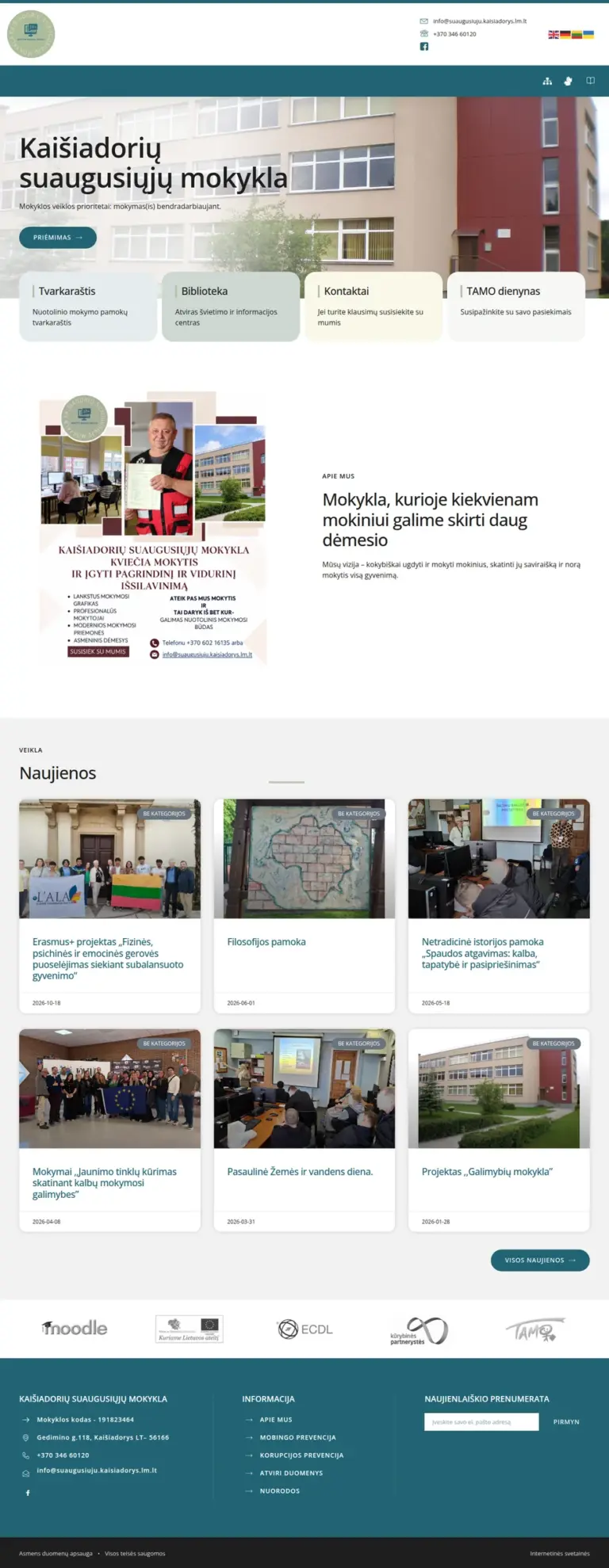
Website development for secondary schools
We build secondary school websites where students, parents, teachers and applicants quickly find the admissions procedure, curricula, timetables, exam information, achievements and the latest announcements. The websites are adapted for organisations to public-sector requirements, convenient content management and accessibility under WCAG 2.1 AA.
Experience building websites for public-sector organisations


A secondary school’s website has to serve several audiences at once: students, their parents, teachers, future students and the administration. Good looks alone are not enough. It needs a clear structure, information that is quick to find, simple updating and compliance with GDPR and accessibility requirements. Our website development is geared to everyday work, so that information is published without chaos and without extra calls to the school office.
- 8yearsof experience – since 2018
- 30+tools deployed for organisations
- 24monthswarranty on completed work
Most common problems
Important information gets buried among documents and news
Exam procedures, assessment dates, curricula and head teacher’s orders often end up on different pages, in attachments or in older posts. Students and parents then cannot find what they are looking for, and the administration keeps repeating the same information by phone or e-mail.
Applicants lack clear admissions guidance
Prospective students and their parents do not immediately understand when admissions take place, which documents need to be submitted, which classes are being formed and where to turn with questions. When admissions information is presented haphazardly, the number of enquiries grows and trust in the school itself falls.
Updating timetables, changes and announcements takes too much time
When information about lessons, consultations, events or exams changes often, it has to be published quickly and clearly. If the website is difficult to manage, updates are delayed and the community relies on outdated information.
The website does not meet requirements that matter to the public sector
Some secondary schools face content that is not accessible to people with disabilities, unclear information on personal data processing, a disorganised document structure or solutions that are hard to describe in public procurement documents. This creates risks both for everyday use and from a compliance point of view.
What we do
A clear, easy-to-manage secondary school website for students, parents and applicants
Students and parents find relevant deadlines and procedures faster, and the administration gets fewer repeated questions.
Exams and assessments section in one place
You will be able to publish information on school-leaving exams, interim tests, consultations and other important assessments in one place, with dates, venues, classes, responsible contacts and related documents.
Applicants see straight away what to do next, so the school receives more precise enquiries and there is less confusion.
A clear admissions area for future students
You will be able to conveniently present the admissions stages, lists of documents, deadlines, the classes on offer, frequently asked questions and contacts in one clear structure that both students and their parents can understand.
Important changes are published on time, so the community relies on the latest information.
Easily updated timetables and announcements
You will be able to quickly publish timetables for lessons, consultations, exam invigilation, events and other activities, and any changes to them, without complicated steps or technical help.
The secondary school presents its strengths more clearly to the community and future students.
Presenting projects, achievements and initiatives
You will be able to promote international projects, olympiad results, non-formal education activities, partnerships, events and student achievements in a structured way, so that the website reflects the school’s active life.
The website is easier to maintain in-house, and compliance and usability risks are reduced.
Accessible and compliant content management
You will be able to manage the main pages, news, documents and contact information yourselves, so that the website is easy to use, follows WCAG 2.1 AA principles, helps you comply with GDPR and is suitable for a public-sector environment.
The secondary school becomes more attractive to applicants through a clear school presentation, project showcases and a convenient information system for parents.
The school website was updated to meet the requirements. They took the school’s wishes into account during development and advised us afterwards. They answer questions quickly.
Get in touch and discuss how to improve your secondary school’s website.

Frequently asked questions
Will secondary school staff be able to update admissions, exam and timetable information themselves?
Yes. The website is built so that the administration can edit the most frequently updated content on its own: admissions information, news, documents, timetables, events and contacts. Everything is managed clearly, without any programming.
How do you make sure the website meets accessibility requirements?
The website is built following WCAG 2.1 AA principles: a clear structure, understandable navigation, appropriate contrast, keyboard operability, alternative text and other accessibility requirements that matter to the public sector.
Is the solution suitable for public procurement, and do you help define the requirements?
Yes. We can help clearly formulate the functional, accessibility, security, content management and maintenance requirements, so that the procurement documents define what the secondary school actually needs.
How are GDPR and personal data issues handled on the website?
The website is planned so that it is clear what data is collected, for what purpose it is processed and how privacy information is presented. Where enquiry or registration forms are used, their scope and content follow the principle of data minimisation.